
PROMETHEUS / NODE EXPORTER
INFRASTRUCTURE OVERVIEW
CONNECTING TO TELEMETRY
SELF-HOSTED INFRASTRUCTURE ENVIRONMENT
Personal cloud.
Operational by design.
A working infrastructure lab for identity, observability, delivery, security, and recovery. Built and maintained as an evolving system—not a static demo.
PROMETHEUS / NODE EXPORTER
NODE EXPORTER
CADVISOR VIA PROMETHEUS
PROMETHEUS TARGET HEALTH
PROMETHEUS / CADVISOR
CPU LOAD
--%
MEMORY
--%
HOST UPTIME--
CONTAINERS--
SCRAPE TARGETS--
REFRESH15s
LIVE OPERATIONS VIEW · VALUES COME FROM THE SAME SANITIZED /API/STATUS TELEMETRY FEED
SYS.01
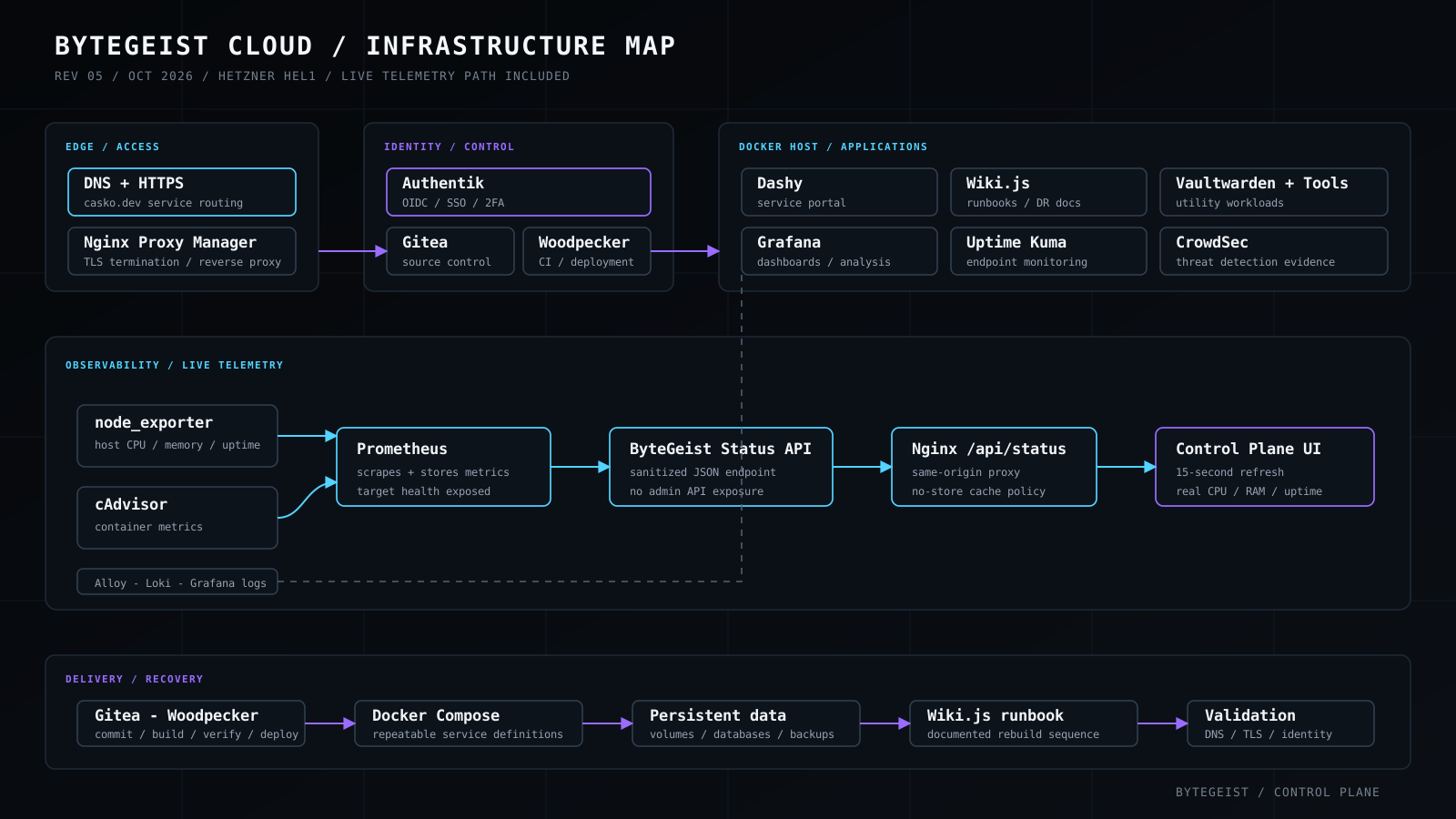
Infrastructure topology
Traffic, identity, workloads, telemetry, and recovery paths documented for the Hetzner host.
DOCUMENTED
EDGE
Nginx Proxy Manager
TLS termination / routing
IDENTITY
Authentik
OIDC / SSO / 2FA
COMPUTE
Docker Compose
Containerized workloads
TELEMETRY
Prometheus + Loki
Metrics / logs / alerts
OBS.02
Monitoring stack
Host metrics, container telemetry, centralized logs, and independent uptime checks.
LIVE + EVIDENCE
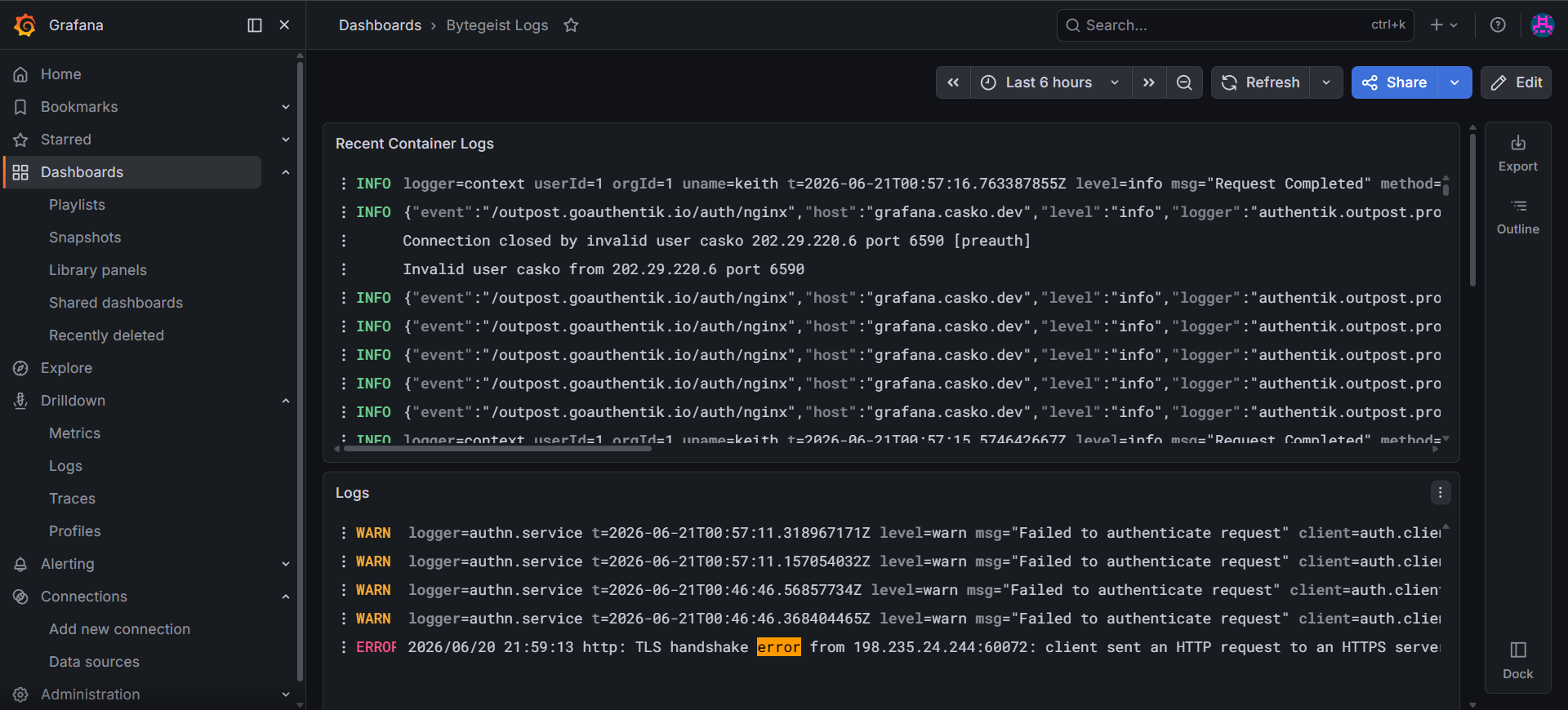
OCT 2026 · LOGGING EVIDENCE
MONITORING COVERAGECONFIGURED
- Host metricsCONFIGURED
- Container metricsCONFIGURED
- Application logsCONFIGURED
- Endpoint uptimeCONFIGURED
- Resource alertsCONFIGURED
- Security eventsCONFIGURED
GrafanaPrometheusLoki
AlloyNode ExportercAdvisor
APP.03
Service inventory
Core applications represented in the internal service portal configuration.
LIVE HEALTH / CONFIG SNAPSHOT
ServiceRoleAccess
GiteaSource controlSSO
Wiki.jsDocumentationSSO
DashyService portalSSO
VaultwardenSecretsDIRECT
Stirling PDFDocument toolsSSO
IT ToolsUtilitiesSSO
Uptime KumaAvailabilitySSO
GITEACHECKINGSOURCE CONTROL
WOODPECKERCHECKINGCI / DELIVERY
UPTIME KUMACHECKINGAVAILABILITY
PROMETHEUSCHECKINGMETRICS
LIVE HEALTH CHECKS · REFRESHED WITH /API/STATUS EVERY 15s
DEV.04
Delivery pipeline
Git-based workflows from repository change to automated deployment.
LIVE DELIVERY
01COMMITGitea repository
→
02BUILDWoodpecker runner
→
03VERIFYStatic checks
→
04DEPLOYDocker host
SERVICE STATE
CHECKING
REPOSITORY HOST
SERVICE STATE
CHECKING
AUTOMATED DEPLOYMENT
SEC.05
Identity & perimeter
Central authentication, protected services, and documented hostile-traffic detection controls.
CONTROLS DOCUMENTED
IDENTITY / ACCESS POSTURE
HARDENED
AUTHENTIK / KEY-ONLY SSH / SSO / TLS
- OIDC providersCONFIGURED
- Forward-auth appsCONFIGURED
- 2FA policyENFORCED
- Public SSH passwordDISABLED

OCT 2026 · DECISION-HISTORY EVIDENCE
DR.06
Recovery state
Configuration in Git, persistent data backups, and an explicit rebuild sequence.
RUNBOOK DOCUMENTED
01Provision hostUbuntu / firewall / SSH
02Restore configGit / Compose / secrets
03Restore dataVolumes / databases
04Validate edgeDNS / TLS / identity
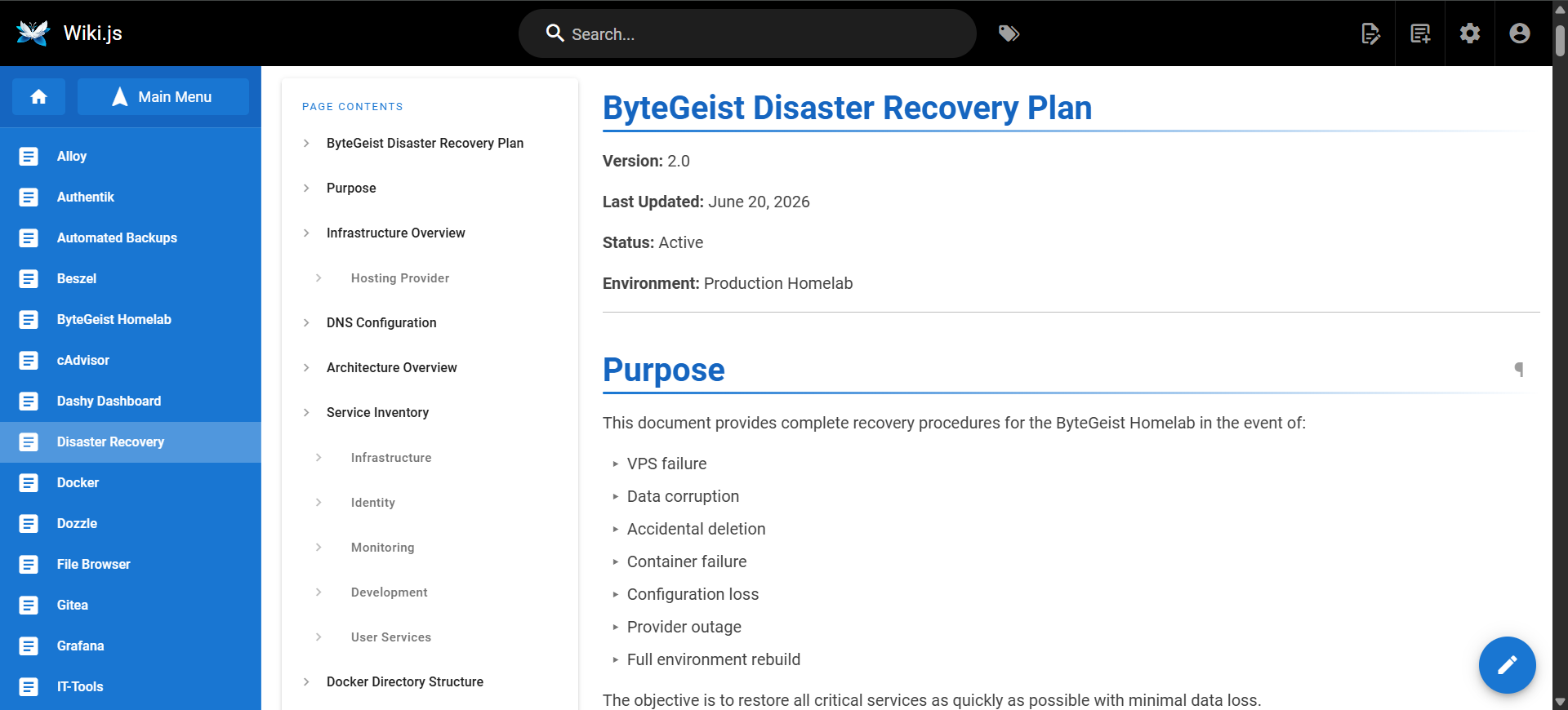
OCT 2026 · RUNBOOK CAPTURE